

Philosophy Series
Hermeticism
By: Noëlle Kathryn
Hermeticism is seen throughout some other philosophies, such as alchemy, but is also just as strong on its own. Along with philosophical ideas, Hermeticism is also a spiritual tradition. It is based on the teachings of Hermes Trismegistus. This was a legendary figure, combining the Greek god Hermes with Egyptian god Thoth.
Hermeticism teaches practical wisdom. It preaches understanding the nature of reality, the self, and the universe as a whole. That also includes understanding the relationships between those realities. It reminds us that we are all connected to a greater whole. We each have our own role in the bigger picture.
There are three key texts that Hermeticism follows. The Corpus Hermeticum is where the core teachings of the nature of the divine, the cosmos, and the mind are all held. The Kybalion is the modern summary of the Hermetic Principles. Lastly, the Emerald Tablet is short, but powerful. It contains the core of Hermetic wisdoms.
Like spoken about in the Kybalion, there are seven Hermetic Principles. Principle one is the Principle of Mentalism. It states that everything in the universe comes from a universal mind. Our thoughts and beliefs shape the world that we live in. We manifest reality.
The Principle of Correspondence is the second principle. This section is where the “as above, so below” belief is held. It says that the macro mimics the micro and vice versa. This means that the inner states of our minds influence our external realities.
The third is the Principle of Vibration. Everything in the universe is in constant motion. All of it vibrates in different frequencies. These vibrations affect our reality and wellbeing. Vibrations and frequencies can also be used as an effective healing tool.
The fourth principle is the Principle of Polarity. This principle talks about how everything has its opposite. In reality, opposites are just varying degrees of the same idea. This teaches us the art of balance and how to transmute energy from one end of a concept to the other.
The Principle of Rhythm is fifth. This tells us that life is cyclical. Everything in life has its natural patterns of ebb and flow, constantly circling back around to the other.
Sixth is the Principle of Cause and Effect. This shows us that every cause has its own effect, good or bad. This emphasizes the importance of intentional actions. These intentions are what shape our lives and characters.
The last Hermetic Principle is the Principle of Gender, mirroring the Principle of Polarity. Everything contains masculine and feminine energies. This tells us that there is a need for both action and reception, and asks us to find the balance between the two concepts. This balance, once found, leads directly to creation and harmony.
There are several ways to apply Hermeticism into your life. It aids in self-awareness, helping you to better understand your mind and personal beliefs. Hermeticism brings you into alignment to live in harmony with universal laws. It helps with personal transformations, changing your inner world to shape your outer life. Hermeticism brings balance to find the middle path between opposites. It also aids in finding your purpose and discovering your role in the whole of the universe.
Hermeticism matters in many ways. It gives a unified perspective, helping to see connections between the self, others, and the world around us. It brings us a sense of inner empowerment, allowing us to see ourselves as a co-creator of our own realities. It preaches practical wisdom with timeless principles, leading to a more intentional and meaningful life. It helps us with spiritual growth, giving us access to deeper exploration between the self and the divine. Lastly, it brings us a more harmonious world where the inner change of one contributes to the outer change for many.
Alchemy Overview
By: Noëlle Kathryn
Alchemy is a tradition, philosophy, practice, and science all merged together to form a singular process that touches each of these areas. Reigning over many centuries and continents, lasting effects of alchemy are widely known, recognized, and used to this day. From pharmaceuticals to self-growth, these philosophies remain prevalent in modern times.
Alchemy covers a wide variety of subjects and is an ancient practice. The overall goal is the transformation of matter, energy, and the self. It is both a physical and spiritual process full of balance, transformation, and creation. The philosophies concern nature and the transmutation of matter. Alchemy brings together elements of early chemistry, natural philosophy, medicine, metallurgy, astrology, and esoteric ideas.
To put alchemy in the broadest terms possible, we must first ask the basic alchemical questions. Alchemy asks us to define “matter”. Alchemists ask how matter can change. They ask what the truest, ultimate first substance was that all other material forms originated from. They want to know if nature can be refined and perfected. Lastly, alchemists attempt to place boundaries between matter, life, and Spirit.
Historically, alchemy was not one singular tradition, but instead, covered by many different cultures. Ancient Chinese and Indian alchemists had slightly differing goals and philosophies than the western world. The alchemical western world included Hellenistic Egypt, Islamic regions, and medieval Europe heading into the Renaissance era.
The alchemists had six main objectives they gave their focus to. Transmutation is, at the very least, widely recognized and associated with alchemy. This is the act of transforming one substance into another. Transmutation experiments were most commonly attempting to start with a base-metal and change it into gold. Finding a universal medicine was another goal of theirs. They held a strong belief that there had to be a “perfect” substance that was capable of curing any disease or ailment. To go along with that philosophy, the alchemists were also after the Elixir of Life. This elixir held the secrets to immortality, healing, and renewal. Going in more of a theory direction, the Prima Materia was a primordial substance where all material forms once originated from. The purification and perfection of matter was also another main goal. This was more of a philosophy that substances could be progressively refined. That philosophy also greatly applies to the self, as well. The last main objective was the Philosopher's Stone. This was a legendary material believed to enable transmutation. In a more spiritual and mystical way, it was also often thought to hold other spiritual properties and powers.
The Philosopher's Stone had the biggest emphasis and lasting effect. It represented unity, balance, and perfect transformation. This magical object was said to turn the ordinary into the extraordinary. The Philosopher's Stone was a symbol and a physical object. This had an effect on your state of mind, energy, and awareness.
There are five major areas of alchemy. First is the physical alchemy. This covers experiments with metals, minerals, salts, acids, distillation, crystallization, and calcination. Next is the medical aspect of alchemy. This included the preparations of medicines, elixirs, and substances that could preserve or restore health. Third is the spiritual side of alchemy. Alchemists explored purification, creation, death and rebirth, along with the relationship between matter and Spirit. The fourth area is the astrological side. This side studied the connection between metals, planets, celestial bodies, and terrestrial processes. Last is symbolic alchemy. Alchemists used images, allegories, and coded symbolism to better understand and communicate complex philosophical and laboratory ideas and concepts.
The alchemical laboratory would show some similarities to a modern science lab today. Practical techniques that were used by alchemists were calcination, dissolution, separation, conjunction, fermentation, distillation, and coagulation. These practices were all very real science experiments using physical substances. Alchemy contributed to the development of early modern science and medicine.
While alchemy helped to build the foundation of modern science, it was not the same as chemistry that we know today. Many theories were proven to be scientifically incorrect. The practices themselves, though, are what lead to modern developments. Those developments founded chemistry, pharmacology, metallurgy, and general laboratory practices the way we see them in today's world.
There are three principles for alchemy. They are considered the building blocks for transformation. Sulfur represents fire, action, and the spirit. Mercury represents balance, flow, and the mind. Salt represents stability, form, and the body.
The four elements also heavily tie into alchemy. Fire symbolizes passion, will, and transformation. Water means emotion, intuition, and flow. Air is mind, communication, and freedom. Lastly, earth symbolizes stability, grounding, and manifestation. When the elements are working together, you have then achieved harmony. With balance comes clarity. Where there is harmony, flow is created. Balance and harmony together create wholeness.
The Great Work was essentially how alchemists described their main mission with their studies. The Great Work was the stages of alchemical transformation. This had to do with changing not only physical matter, but also changing the self using the same process. There are four stages to this process, the first being Nigredo. This stage represents dissolution, letting go, and the void. Albedo is the second stop meaning purification, clarity, and renewal. Citrinitas is third, symbolizing illumination, inner light, and wisdom. The fourth and final step is called Rubedo. This step signifies integration, wholeness, and mastery.
The alchemic cycle is a major philosophy depicted by the Ourboros. Everything is in a constant cycle of creation and transformation. This covers everything from physical matter to the spiritual self. The idea is that nothing is ever truly lost- it is merely transformed. The four steps to the alchemic cycle are refine, coagulate, create, dissolve, and then it circles back to refine. The interesting piece of this flow chart is that it can be read in both a clockwise and counterclockwise direction.
Alchemy still shows up in everyday life. It is a way of living and thinking. Even in the modern day, its philosophies teach turning challenges into growth. They see the hidden potential in physical objects and the self, alike. Alchemists have patience and trust in the process, Spirit, and the universe. Alchemy urges you to work alongside your intentions. It also makes you stop to notice the beauty in transformation instead of focusing on the fear of change. Alchemy is the art of turning what is into what can be.
Alchemy leaves us with plenty to process, think about, and apply to your everyday, modern life. It teaches us that transformations take time, patience, and trust. It shows us that not everything is meant to be forced. Alchemy reminds us that balance is key. It tells us that the elements live within us and that we are a part of the cycle. Lastly, alchemy reminds us that change is not the end- it is, in fact, only the beginning.
Sacred Geometry Pt. 10
Metatron's Cube
By: Noëlle Kathryn
Metatron's Cube is a very visually interesting concept in sacred geometry. In scripture, it is said that the archangel Metatron forged the cube from his own soul. He is said to hold the knowledge of the creation of the universe. This sacred shape consists of every pattern in the universe.
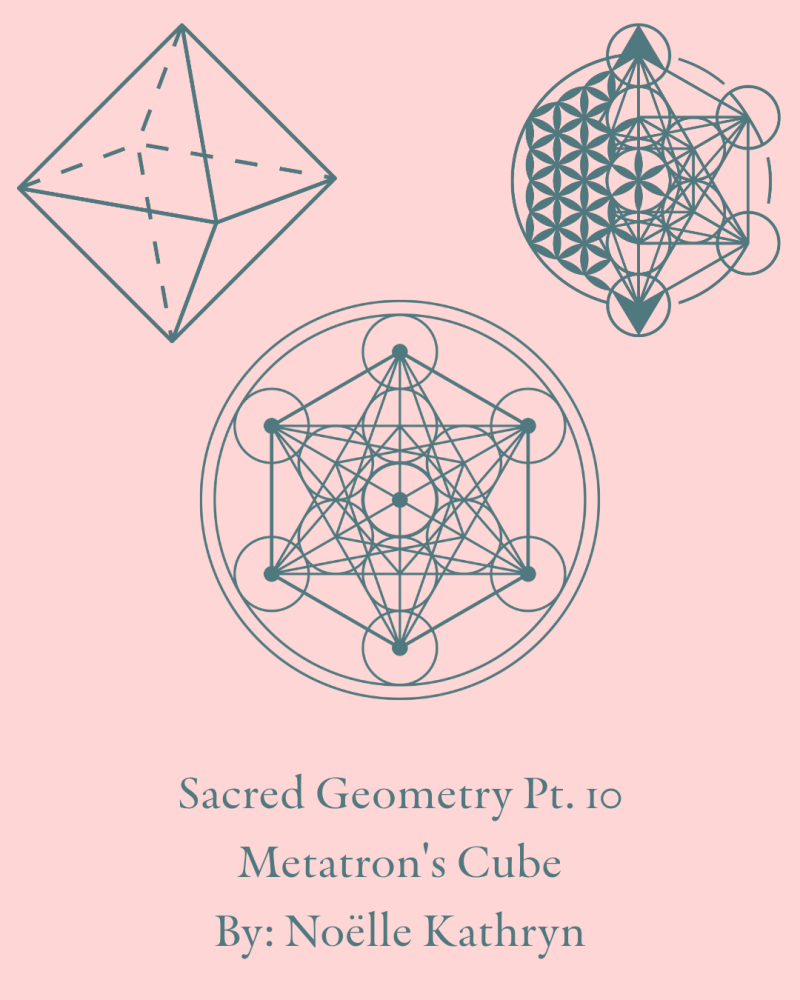
The cube itself begins with 13 circles. Connecting the center node of each circle to all of the other nodes creates a network of 78 lines. Inside of this shape is every 2D shape, the Flower of Life, and the 5 platonic solids. As a reminder, these solids are the tetrahedron, hexahedron, octahedron, dodecahedron, and icosahedron. In alchemy, it is known as the “creation circle”. It represents the synthesis of all six directions with a neutral center.
This mystical 3D cube gives a way to watch over the flow of energy connecting earth and the divine together. It spins with energy, aiding the replacement of negative thoughts with more positive ones. Metatron's Cube used to be drawn around people or objects to ward off demons and satanic powers.
This sacred shape holds many meanings and ideas. It is the blueprint of creation and divine order. Along with that, it represents how all of life is interconnected. Metatron's Cube balances masculine and feminine energies and is a good reminder that we ALL have BOTH kinds of energy within us. It's used for protection, awareness, and spiritual growth. It is said to be the bridge between heaven and earth.
It is symbolic of how the universe was created by conceptual energy. Our thoughts are energy and ideas are energy. Therefore, all that is consciousness comes from a concept of energy. This makes the creation of the universe and everything within it being created out of conceptual energy.
Using and incorporating this sacred shape with your practice isn't too difficult. The easiest thing to do is wear it. This will help to raise your spiritual awareness. Using it while you meditate can open your mind to divine information as to the workings of the universe. Using it in any way will help with releasing healing energies. You can also use it for Light Body activation.
Metatron's Cube as a shape will help with focus and inner peace when meditating. It is a great tool for manifesting and setting intentions. When put on display in your space, it promotes protection and harmony. When used as a study object, it deepens your understanding of life.
This sacred geometric shape reminds us that the universe wants us to discover our personal power and use it to do good in the world. Metatron's Cube symbolizes unity and harmony in all of the energy in the universe. How can you use your own personal power to represent this shape and its ideas?
Entities & Beings Series
Kikimora
By: Noëlle Kathryn
Kikimora is another Slavic entity, sometimes depicted as Leshy the forest guardian's wife. She holds two forms. The first form is that of a domestic entity that is found in homes. The second is a form of an old woman ruling over the swamp lands. However, both forms are able to teach us the same lessons, just in different settings.
The household spirit Kikimora is older than the swamp version of this feminine entity. In the domestic version, she is the wife of Domovoy, the guardian house spirit. Kikimora is said to live behind the stove, down in the cellar, or up in the attic. If your home is orderly, clean, and runs smoothly, she helps with household chores. Kikimora helps spin thread and will tend to the chickens. If your home is full of mess, conflict, and disorder, it is told she will break dishes, make noise, and cause even more chaos.
The swamp Kikimora is the version associated with Leshy the forest guardian. In this version, she appears as an ugly, old hag haunting marshes and swamps. Kikimore scares wanderers, throws them off track, and is said to sometimes even drown them in the swamps. Along with that, she is thought to kidnap abused children, like Leshy.
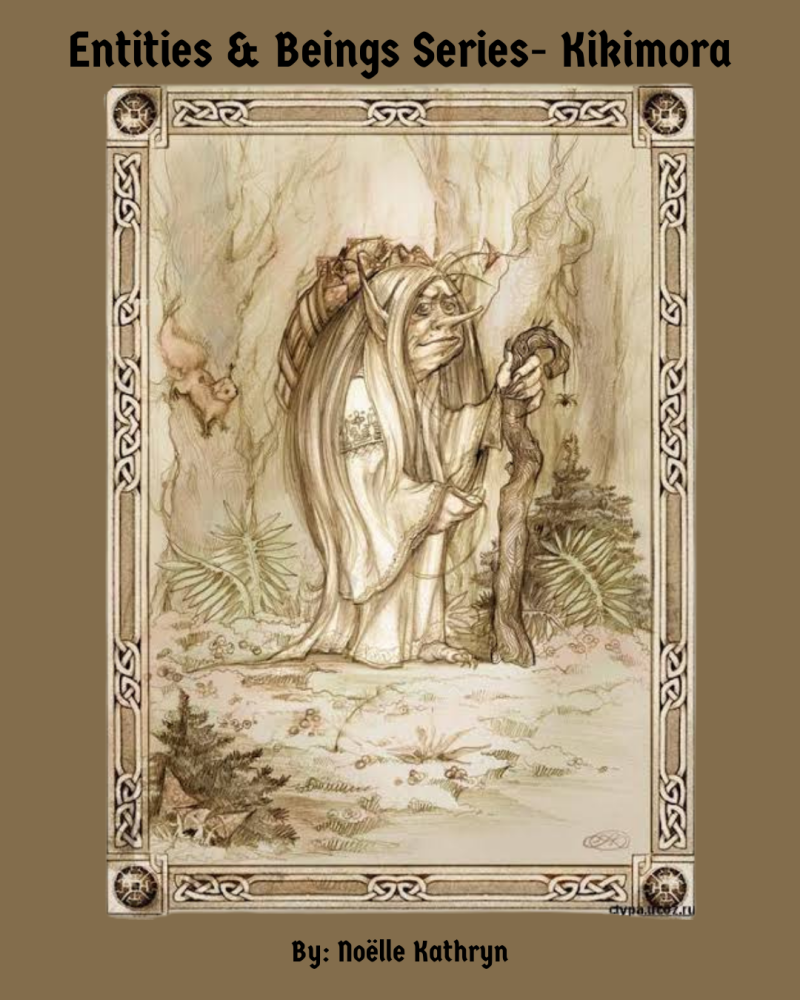
With either version, Kikimora's form can be one of three things. The first form is a small, scruffy old woman. When in the swamps in this form, she is said to dress in moss and grass. The second version is of a young girl with loose, bouncy hair. The third form is an old, animalistic woman often resembling a bird or rodent. Regardless of form, she is found by her wet footprints when talking about the swamp lore.
Kikimore is also sometimes thought of as the demon behind sleep paralysis. She is said to also cause night terrors. Sneaking in through keyholes in the dead of night, Kikimora finds her victim sleeping. Once she has identified someone, she then sits on their chest where she strangles or suffocates them.
There are some protections you can put in place to ward off Kikimora. Leaving an upside-down broom in the doorway is one route of protection. You can also supposedly place a belt across your bedsheets. Lastly, and perhaps the easiest and best route, is to keep your home clean, orderly, and in good spirits.
Kikimora is no more bad than she is good. She only punishes bad behaviors and disrespect. She is much like Leshy in that regard. She teaches us to have respect for our home and nature. Through her, we learn respect and peace towards others. We also learn to have respect for the unknown.
Would you work with Kikimora?
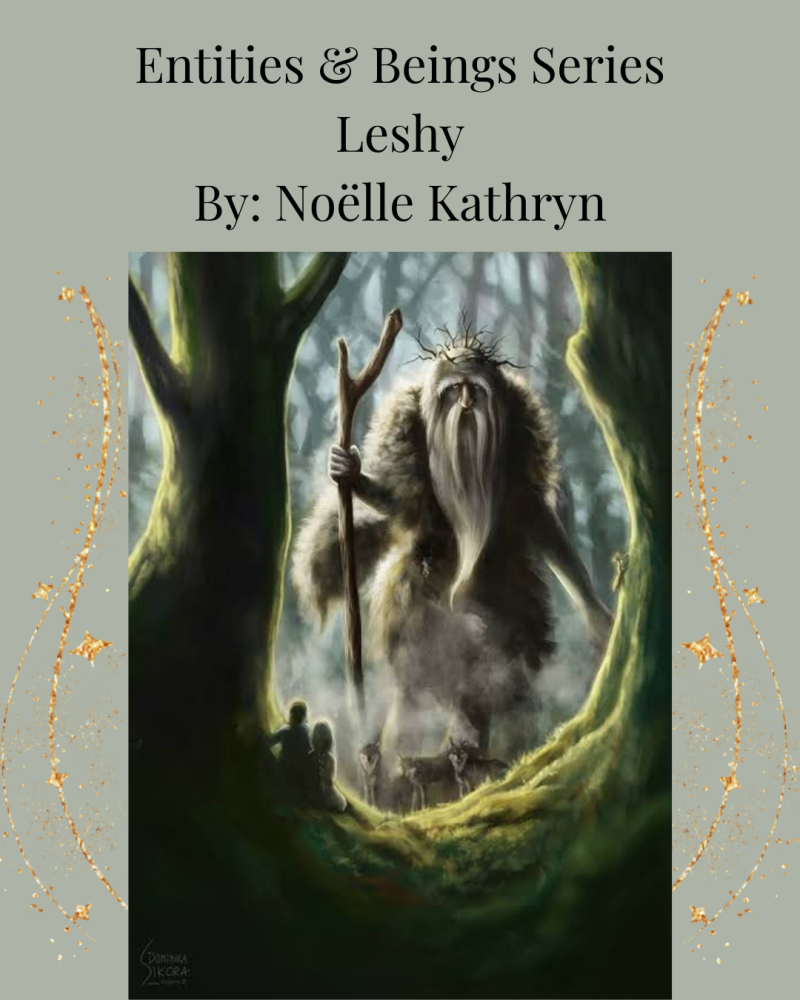
Entities & Beings Series
Leshy
By: Noëlle Kathryn
Leshy belongs to Slavic mythology. The Slavic word “les” fittingly means “forest”. Leshy is a notorious shape shifter and guardian deity of the forest. With a gray-green beard made of moss and stunning green eyes, he protects the wild of nature from irresponsible travelers. Widely compared to a demon, this forest entity is anything except that.
As mentioned above, Leshy is a shape and size shifter. He is able to alter his form in a plethora of ways. He can be seen as an old man, tall tree, bush, or animals like a wolf or raven. In regards to his size, this being can become as tall as the forest canopy when walking amongst the trees, shaking the earth with each massive step. On the contrary, Leshy can also transform his size to be as small as a mushroom in an open field once out of the trees.
His form is truly that of natural forest beauty. Again, he is depicted with a grayish green beard composed of moss. Leshy's eyes glow a bright green. He is adorned with horns and tree bark-like skin. He is also sometimes noted as lacking a shadow.
Leshy is a nature guardian at his core. He protects the animals and trees. Often, this being is considered the shepherd of the forest. He is humorous and a trickster at heart. Leshy misguides hunters, travelers, and children wandering through the forest. He mimics voices of their loved ones or the sounds of the wind. These sounds are used to make the forest-goers wander around in endless circles. This guardian is morally ambivalent. He is not purely evil, just as he is not purely good. This is represented with how the wild and untamed forces of nature work. He rewards respect while also punishing those who break the rules of nature and society. Shepherds will often form pacts with him to keep their livestock safe.
Leshy can also be considered a sort of family man. He sometimes has a wife named Leshachikha. Other times, his wife is said to be Kikimora of the swamps. He is told to have two children, Leshonki and Leszonky.
This entity's view on humans varies depending on whether or not they interact with the forest respectfully and their behaviors. Leshy is perceived as malevolent due to the misguiding of travelers and the abduction of children. However, these actions are not as they first may seem. Leshy does NOT merely abduct kids. To these children, meeting Leshy is a blessing in disguise. The kids he takes are only those who face abuse in their home lives. He then takes them to the ethereal realm of the forest dwellers. There, they face no abuse and can thrive.
Leshy is often mistaken as a demon due to his temperament. But bear in mind, his actions are based off of the travelers’ behaviors in the first place. His goal is not to harm humans for no reason at all. His ultimate goal is to punish improper behavior in the forest and the breaking of societal rules. On the other hand, he uplifts respectful wanderers who have clean consciousnesses. He often helps forage fruits and berries and will give out directions around the forest. The only catch is you must be respectful when asking for his assistance.
There are a few countermeasures and offerings travelers will take to keep them safe from Leshy and his games during their journey through the forest. As protection, travelers will turn their clothes inside out and place their shoes on the opposite feet. This is said to help escape Leshy's attention so you do not get trapped in his maze. Wanderers will also often pray to their own deities and retrace each and every step they take to avoid the maze. Visitors also leave gifts and offerings to Leshy. Placing bread, salt, honey, and tobacco- or a mix of any or all of them- on a tree stump will help to get you on this guardian’s good side.
To summon him, travelers use trees and branches while calling out “Grandfather” or “Uncle Leshy”. Another common summoning phrase is, “Lord of the Forest, I have a request for you!”. Regardless of the words you choose, as long as it is respectful and pure, Leshy will show himself in a helpful manner.
Leshy teaches us many concepts. He is HUGE on respect. He teaches respect for nature, deities, and other human beings. He shows us how humans relate to the natural world. He is the morality and survival guide for rural communities. From him, we learn that humans are visitors and NOT owners. He teaches us to take only what we need and to leave the excess for others. He speaks about balance and reciprocity. Lastly, he teaches us to have respect for the unknown.
This forest guardian is way more influential than you may first be led to believe. To work with and learn from him are truly blessings. Take the lessons Leshy has to offer and go out and explore the world and the unknown!
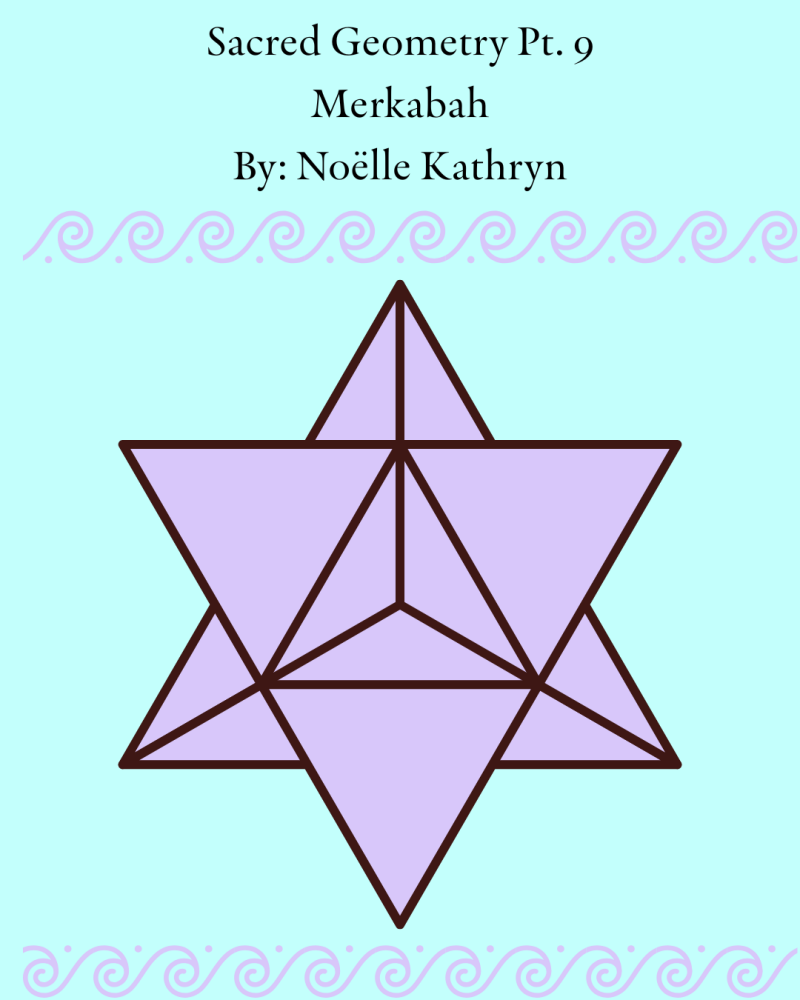
Sacred Geometry Pt. 9
Merkaba
By: Noëlle Kathryn
Merkaba is actually made up of three words: “mer”- meaning light, “ka”- meaning spirit, and “ba”- meaning body. All three words work together to give the Merkaba its meaning of “vehicle of light”. Literally, the three words together mean the union of spirit with the body, surrounded by light. Merkaba means “chariot” in Hebrew. This is a chariot of light that connects your humanity to your divinity.
The use of this sacred shape dates back to ancient Egypt and Judaism. In ancient Egypt, this shape was carved into tombs to represent the vehicle for the pharaoh's soul, giving them safe passage to the afterlife. In ancient Judaism, the word means “chariot” after Ezekiel's vision. “Merkaba” is also found in the Old Testament of the Bible 44 times.
The shape itself is also something to be studied. It is the 3D version of the eight-pointed star. The Merkaba consists of two overlapping tetrahedrons in opposite directions. The shape represents balance and the integration of opposite energies. You can see this idea when you compare the physical to the spiritual, or masculine and feminine energies together.
The Merkaba is a sacred geometric energy that surrounds the human body. The upward tetrahedron represents Spirit or Heaven. It holds masculine and active energies all while expanding upwards. The downward tetrahedron represents the body or earth. It has feminine and receptive energies. Its energy anchors downward. When it is balanced, it creates a spinning field of light, that is what is the Merkaba. It can also be called the star tetrahedron or the Light Body vehicle.
The Merkaba combines opposing energies in perfect balance. It takes masculine and feminine, or earth and the cosmos and creates a harmony. This union results in an activation of light and protection. The light of the Merkaba surrounds your body and is able to transport your consciousness to higher dimensions. This can be a great reminder of the potential power we can yield when we find balance and raise our vibration. It gives us guidance and provides healing energies. It also reminds us that we ALL have the ability to connect our higher self and Source- as we are all a part of the Source.
Many meanings and purposes are behind the Merkaba. It connects heaven and earth. It also activates the Light Body. This concept is all energy and NOT physical. It is the vehicle to the physical human form. This holds higher levels of consciousness, divine intelligence, and cosmic energy. The Merkaba facilitates spiritual ascension, as well as serving as protection in the form of a shield. This shape opens you up to a higher level of dimensional consciousness and aligns you with divine will. The Merkaba restores harmony and sacred balance.
In order to get use out of its wisdom, you must first be willing to learn to accept it. Having ignorance and apathy only serve to fixate on one of their many lies. These qualities will not serve you well on your path to ascension. The true Merkaba meaning will not be revealed until your mind is no longer plagued by disbelief. It increases your intuition and inner guidance. The shape also helps with astral travel and dream work. The Merkaba cleanses and restores your aura and aligns and energizes your entire chakra system. This shape aligns with universal love and truth.
You can use the sacred Merkaba in so many ways. Visualizing it and using it during meditation or prayer is an easy way to begin to incorporate this shape. Using it before falling asleep can aid in your dream work. Another time to use this sacred shape is when you are feeling blocked or unbalanced. You can also use it during any spiritual ritual or activity. The Merkaba also helps when summoning guidance and clarity.
Working with the Merkaba doesn't have to be difficult. Start by setting a clear intention while visualizing the Merkaba rotating around you. Then call upon your chosen divine beings or archangels. Take deep, controlled breaths and raise your vibration. After that, allow the light to activate and guide you. Meditating daily helps to build this skill and make it a habit. Other things you can do daily is eat light and natural foods, spend time in nature, study and expand your consciousness, and live with love, gratitude, and integrity.
To know which method of work is best, you first need to know what each of them can do. Meditation allows you entry to a higher state of consciousness and spiritual travel. With energy protection, the Merkaba creates a field of divine light that protects your energy and space. In ascension work, it supports the activation of DNA, your chakras, and your Light Body. Manifestation work aligns your will with divine purpose to manifest more clearly. For healing and balance work, it clears blockages and restores energetic, emotional, and spiritual balance.
Activating your Merkaba takes dedicated work. First, you must set intentions and ask for protection, alignment, and higher good. Then move on to grounding yourself. Visualize roots connecting you to the earth. Breathe and center yourself. Visualize the tetrahedrons. Look at one above you, which is purple, and one below you that is blue. Now is the time to connect the light. See them merging into you and forming the Merkaba. Activate the spin on the shape in a counterclockwise direction. Lastly, when continuing on with your day, keep in mind to live in alignment.
There will be signs that your Merkaba is activating. You will notice more visual dreams and astral experiences. There will be a heightened sense of intuition and synchronicities. You will feel lighter and more energized. There will be a sense of deeper peace and clarity. You may seem more interested in spiritual knowledge and growth. There will be a desire to help, heal, and awaken others. You will feel guided and protected. All you really need to do is believe and trust the process. Remember that your soul knows the way.
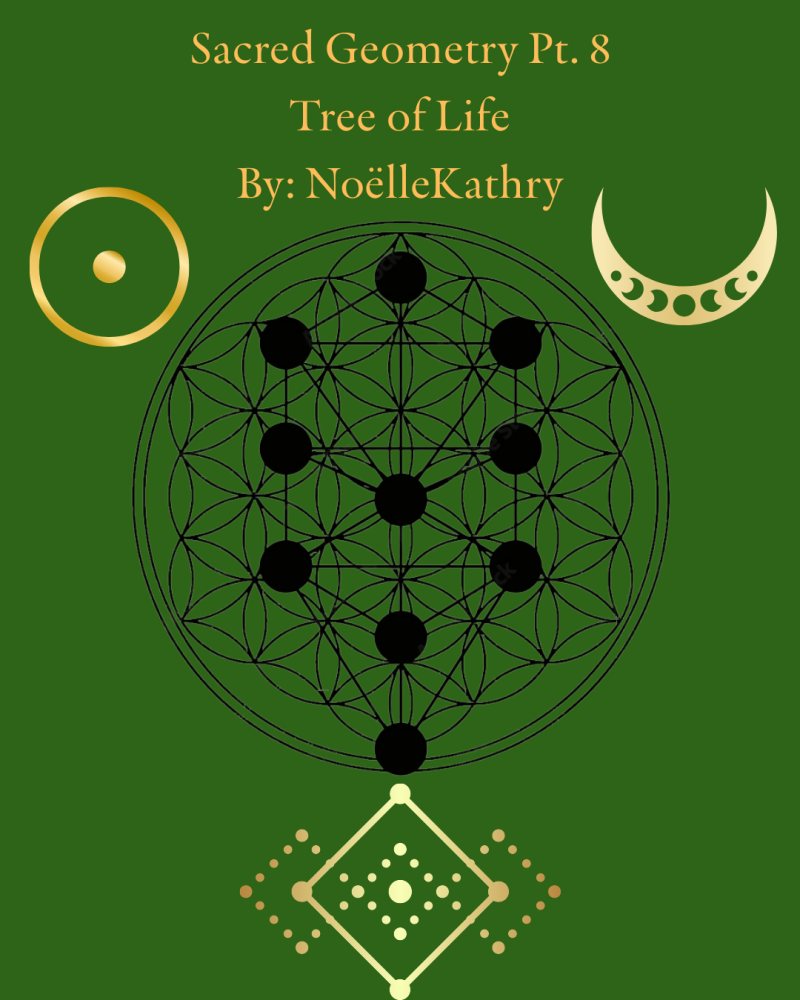
Sacred Geometry Pt. 8
The Tree of Life
By: Noëlle Kathryn
The tree of life is a conceptual masterpiece of sacred geometry. Not only does the shape itself fit into the flower and seed of life, but the ideas and concepts behind them all tie together and come full circle. Along with the flower and seed, the tree of life speaks about harmonic proportions, holds symmetry, and is found in nature all the way down to cellular division. The tree of life brings the geocentric map of the cosmos and the map of the human body with the chakras all together in unity. Like many other sacred shapes, it represents the same ideas of a balance of duality. The tree of life integrates opposing forces into a balanced whole.
This sacred shape comes from Jewish mysticism, being found in the Kabbalah. The tree serves as a visual map to help explain how infinite divine energy descends into the physical world. It also shows how human consciousness can ascend back to a state of unity with ALL- including the Divine. The tree of life is another major sacred shape that strongly pushes the idea of divine unity and connection.
The tree of life is made up of circles, lines, and pillars. There are 10 Sefirot, which are the circles. These are all of the divine attributes, emanations, or stages of the human consciousness. There are 22 connecting lines called paths. The paths link the circles together to connect the shape. Each line corresponds with one of the 22 letters of the Hebrew alphabet. The paths also represent the experience of the journey between the states of mind or the cosmic forces- whichever way you are working with the shape. The circles and lines create three pillars. The right pillar represents masculine, active, and giving energies. The left means feminine, receptive, and restraining energies. Lastly, the middle signals an equilibrium, harmony, and a spiritual awakening.
The tree of life is made up of seven levels. These levels align with the seven chakras. Its symbolism comes from the planetary Greek/Roman gods. The tree of life represents the geocentric model of the cosmos. These seven levels begin at the top of the tree and align with the head on the human body. This is your crown chakra and is represented by Saturn. When Saturn is mirrored at the sun, its result is the moon. The second level is made up of circles 2 and 3. They represent your 3rd eye chakra and are depicted by Jupiter. The mirror of Jupiter is Mercury. The third level consists of circles 4 and 5. They make up your throat chakra. The planetary model represents this with Mars and its mirror, Venus. The fourth level is just circle 6, representing your heart chakra. This is shown as the sun and is the middle of the seven layers. In the Jewish faith, this is also thought of as Christ. Layer number five consists of circles 7 and 8. This is guided by your solar plexus chakra. Its planetary placement is Venus, who has a Mars mirror. The sixth layer is circle 9. Circle 9 represents your sacral chakra. It is depicted by Mercury with a Jupiter mirror. The last layer consists solely of circle 10. This final circle is your root chakra. Its planet is the moon, which makes its mirror Saturn.
Each of the 10 circles also have their own correspondences. Circle 1 starts at your crown and is represented by that same chakra. This circle represents divine will, a pure consciousness, and is considered the source of all. It corresponds with the spirit element and is centered in placement. It is shown as the color white and the archangel Metatron. The faculty is your pure consciousness. It is the atomic part of your soul. Within the tree analogy, it is represented by the roots.
Circle 2 is wisdom as well as the 3rd eye chakra. It brings divine wisdom, inspiration, and the first emanation. This is the process of beginning to grow beyond the source. It is an air element and represented by the east. It is shown as the archangel Raziel. It's a pale blue color and is shown by your intuition. It is a part of your spiritual self. In the tree analogy, circle 2 is the first shoot of the tree.
Circle 3 means understanding. Its 3rd eye chakra is the same as circle 2. Circle 3 stands for discernment, structure, and the womb of creation. It is also an air element, but its direction is west. Its color is black and is represented by the archangel Tzaphkiel. The sense is your imagination, and this circle is a part of your spiritual self. The tree analogy represents circle 3 by the sap or matrix.
Circle 4 speaks about mercy. It is shown as the throat chakra. It means love, expansion, and generosity. It is a water element and is seen in the southeast direction. Its corresponding archangel is Tzadkiel. It is blue in color and represents the ethical and spiritual part of you. It is shown as the right side of the branches in the tree analogy.
Circle 5 is strength and the throat chakra. It represents severity, discipline, and power. It is a fire element and can be shown in the northwest direction. Its color is red and the faculty is the will. Its archangel is Kamael. It represents your ethical and spiritual side, as well. The tree analogy shows this as the branches on the left side.
Circle 6 is represented by beauty. It is your heart chakra. Circle 6 means harmony, compassion, and the heart. It is a mixture of elements and resides in the center. It is shown by the color gold and archangel Rafael. Circle 6 is your balance and soul. In the tree analogy, it is the trunk.
Circle 7 means victory. It is represented by the solar plexus chakra. It means endurance, emotion, and nobility. This circle also has a mix of elements. It's directionally found south. Circle 7 is green and symbolizes the archangel Haniel. The faculty is your emotions and it rests in the lower soul. The tree analogy shows it as the right side of the leaves.
Circle 8 is splendor. This is your solar plexus chakra, as well. It means intellect, analysis, and humility. It has mixed elements with a northern direction. Its color is orange and is represented by the archangel Michael. Circle 8 is your intellect and the lower part of your soul. The tree analogy depicts it by the left side of the leaves.
Circle 9 means foundation. It is your sacral chakra. Circle 9 shows your connection, the subconscious, and the foundation. It is another mixed element circle with below as the direction. Its color is purple and the archangel is Gabriel. The sense is connection and circle 9 resides in your astral self. In the tree analogy, this is the sap flow and circulation.
Circle 10 is the last of the Sefirots. This circle represents the kingdom. This is your root chakra. It means manifestations, the physical world, and the Shekinah. The Shekinah is a Hebrew term depicting the Divine presence of God living in the physical realm. Circle 10 has a direction simply as earth, as well as an earth element. It is brown or black in color. Its corresponding archangel is Sandalphon. The sense is action and presence and is your physical self. In the tree analogy, it is the fruit or the total manifestation.
Below all of the Sefirots lies the material realm. This is full of forms and manifestations all in duality. Once you reach this point, you can ascend your human consciousness back to a state of unity with all- the Divine included. You can start your journey to this point by meditating on this sacred geometric symbol and studying it with all of its hidden, intertwined meanings. Use it to help navigate personal growth, stripping away ego and illusions, and helping you climb towards higher wisdom and unity. Buckle up and prepare yourself for a wild, yet fulfilling, ride to ascension.
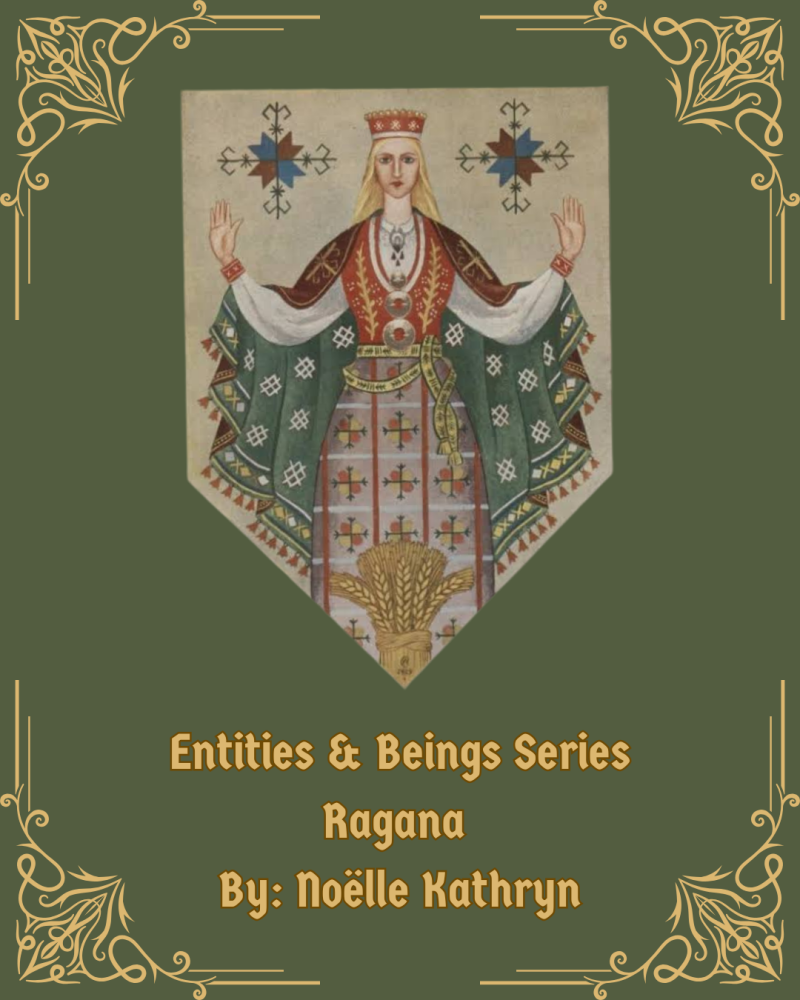
Beings/Entities Series
Ragana
By: Noëlle Kathryn
Latvian folklore brings us a female entity of the night named Ragana. She is an ancient pre-Indo-European spirit dating back to the Neolithic era of the New Stone Age. There, she is a powerful prophetess who reveals the future as well as sees the past. Her name's root word in Latvian means “horn” or “crescent”, while the root verb means “to see”.
Ragana rules over many concepts and ideas. She is the guardian of overnight, winter, birth and death, rebirth, and destruction and regeneration. This feminine spirit also rules over fertility, abundance, and menopause.
Ultimately, she is the spirit of balance. In many ways, she rules over two opposing ideas. Ragana is someone all-powerful. She sees all and knows all, giving her the ability to hold contradictions wisely. Ragana is thought to be a goddess of death all while being a master healer at the same time. It is said she can cure any ailment or illness.
She is the guardian of nature's cycles. Ragana is the cause for the opposing concepts of both creation and growth, and decline and destruction. With the ability to bless or curse, it's said that even her curses would lead to positivity.
Lastly, she is an entity reigning over the fertility of all animals- humans included. Along with all of her other conflicting actions, comes the ability to cure infertility or cause impotence. She was the ultimate feminine spiritual being of her time.
It is unclear for certain if Ragana was one of three things. The first option is that she is one, singular being. The second is that Ragana refers to a GROUP of beings. The last possibility is Ragana is a singular being with a following of either hand maid assistants or devotees behind her, creating the image of a group while she herself is still a singular spirit. Either way, she is a highly respected feminine being with a large following of female-centered folks.
In modern Latvia, “Ragana” translates to “witch”. This translation comes with a very negative perspective of the word. This is thought to be due to her many curses on people who are unable to see the bigger picture and how her “curses” were more of “blessings in disguise”. Because of this, her name is now used in shaded lighting in the Latvian language.
Ragana's holy night is the winter solstice. You can call on her for your rituals leading up to the longest night of the year. She will aid in manifestations, fertility, abundance in the times of darkness, and healing ANY ailment- be it mental or physical. The imagery associated with her can be used around your altar to beckon her near you. Any forms of birds, brooms, moons, and fertility pieces will work in bringing forth her presence. Birds and brooms are most important because it is said that Ragana rarely walks- she mainly will either transform into a bird, or pull out her broom and fly off to her next destination.
Working with Ragana is not for the faint of heart, though she brings many blessings to those who do work with and follow her. It is a challenge to see through what could at first be described as “negative” or a “curse”, but remember to look at the deeper meaning and bigger picture. Keep in mind that she is the spirit behind both death AND rebirth. In order to be reborn on the right path for you, your old path must first die off. When leaving this article, think of your “curses” and try to find the blessings behind them. Ragana does not give out a curse for no reason at all. Remember that your curses have deeper meanings behind them, and so does Ragana, herself.
Sacred Geometry Part 1: The Loop, Spiral, & Vesica Piscis
Sacred Geometry: The Spiral, The Loop, & The Vesica Piscis
Entities & Beings Series
The Baba Yaga
By: Noëlle Kathryn
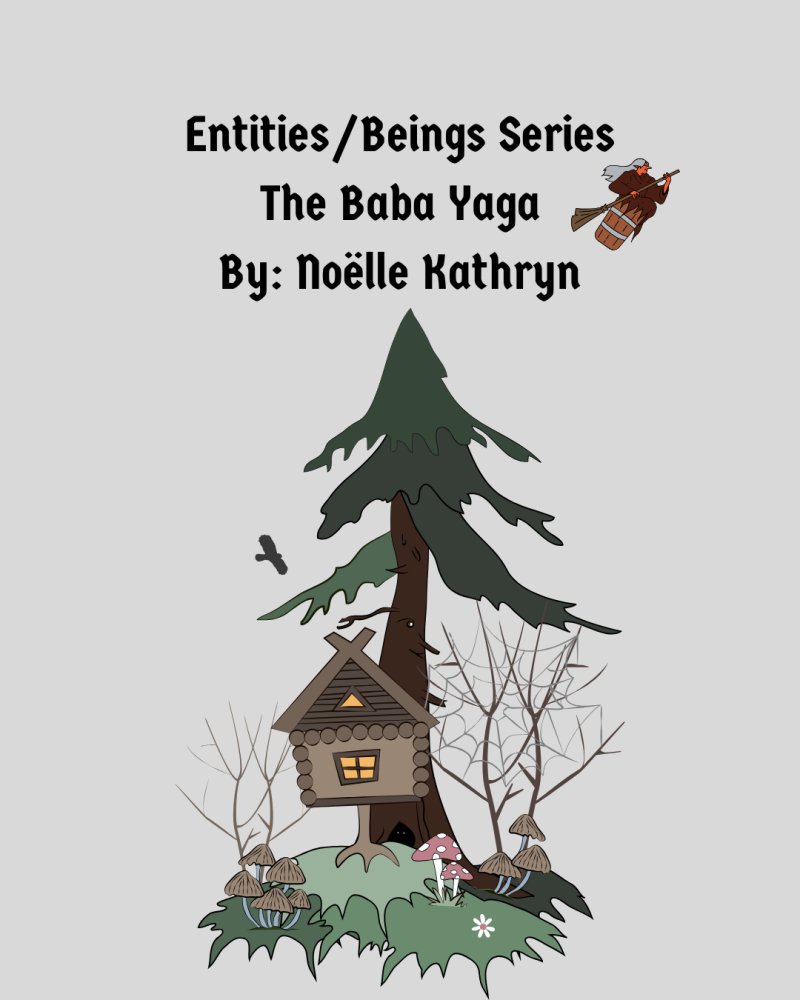
What do you picture when you think of the Baba Yaga? The Crone? Her hut held up by chicken legs? Terrified travelers? From merely a folklore aspect, that does vaguely encompass her presence. However, looking past the gossip, you will unlock incredibly valuable spiritual wisdom and a clearer perspective. Let's take a deeper dive into what Baba Yaga symbolizes, stands for, and teaches us in order to see her true beauty.
Baba Yaga is referred to in many different ways. “The Witch of the Woods” is one of the most universally understood names for her. Also known as “The Ancient Wise One”, “The Guardian of Thresholds”, and “The Untamed Spirit of Nature”, Baba Yaga is represented by numerous versions of her spirit. As she is depicted in Slavic folklore, she is the crone of the forest. It is told that she devours those travelers who wander off of the path. She's carried through the woods in her hut supported by chicken legs. She is not so much of a “goddess” as she is an ancient being. Throughout folklore and other spiritual correspondences alike, Baba Yaga governs the wild and fate.
This ancient being of raw, feminine power is symbolic in much deeper and more helpful ways than just her scary folk tale character. The Baba Yaga symbolizes the duality of life and its cycles. She exudes the power of transformation, and with that, also representing the role of guardian between the known and unknown. These two roles go hand-in-hand. Her power of transforming refers to the transformation you undergo between death and rebirth- which are both widely unknown. She represents pure independence and femininity. This gives the idea that real feminine power is a form of independence itself. She holds the power of shadow wisdom, the morally unbiased views of total truth. Baba Yaga brings ancestral power through with the crone archetype at her core. She also symbolizes the raw power of nature, the type that demands respect.
The Baba Yaga is the Guardian of Thresholds. She lives between the worlds of physical and metaphysical. As the guardian to these places, she must ensure its travelers are worthy. She tests your courage- a test you are only capable of passing if you are truly ready. Her assessment requires you to be prepared to face the truth. Along with her guardian role, she is also considered a truth revealer. This idea is seen by the type of test she puts the travelers seeking her aid and wisdom through. Baba Yaga sees all that is hidden. Some of these parts are hidden so deeply that you don't even realize they're within you, yourself. She holds the mirror up to your soul for you to be able to face your shadows and find your truth.
She is the transformation of death to rebirth. Baba Yaga holds only the endings that create pathways for new beginnings. She allows you aid in shedding what must first die off in order for you to be reborn in total truth. For you to be reborn in total truth gives way to the thought of self-forgiveness for your past. Self-forgiveness is the step toward total truth that often gets overlooked and misrepresented as a weakness or being vulnerable. That is yet another fear you need to be able to face when going through the Baba Yaga's trials.
Baba Yaga is a healer and medicine woman. She brings out the powers within herbs, bones, and wild (otherwise known as natural) remedies. Those of whom respect the old ways and come with pure intentions will be healed by her gifts. Do not misconstrue “respect for” with “personally believing and aligning with” the old ways. You do not need to personally be a part of something just to hold all due respect for it.
Energy cleansing is yet another aspect Baba Yaga aids with. She sweeps away illusions, lies, and stagnant energies, clearing the pathway for you to walk in alignment. This gives you a fresh start, new perspective, and a chance to turn your life around to be more centered towards your own unique truth.
She is a protector of the outcasts, the misunderstood, and the different. She holds the highest respect for those who can walk their own true path without being wavered by the external pressures of societal normalcies. She reminds you that your uniqueness is your greatest asset. The Baba Yaga urges you to take advantage of the perks that come along with being your most authentic self.
Baba Yaga is nature in her most raw form. She is wild and unable to be tamed. She does not require your understanding. She does, however, require your respect. She is the respect of unknown forces and powers of universal nature itself.
With all of these roles comes the last and perhaps most important- a teacher. The Baba Yaga gives us a multitude of lessons ranging from the universe, society, other's humanity, spirituality, and ourselves. She teaches us to trust our intuition. She urges us to lean into those gut feelings we have. Through her, we learn to face our fears and embrace change and the unknown. She teaches us to honor the cycles of each aspect of life and creation that came before us. We learn the valuable lesson of giving respect without having the need to understand first. She shows us how to live authentically and walk our own individual path. She reminds us, though, that solidarity and independence do not equate to the same thing as isolation. You can exist individually and together all at once. Once thought of as harsh, but now seen as assistance, Baba Yaga prepares you for and gives you what you need, NOT what you want.
Should you choose to work with the Baba Yaga and prepare yourself for her test, these correspondences will help center your focus around her as well as show her you are willing and ready to put in the work and listen. Her zodiac is represented by the Scorpio. Her associated colors are red, white, black, and gold. The preferred crystals are garnet, bloodstone, tourmaline, obsidian, and/or smoky quartz. Her entity aspect is the crone. The herbs and flowers associated with her are patchouli, sandalwood, and geranium. She is represented by the waning and new moons, signifying death, transition, and total darkness. Her animals are snakes, cats, and ravens. Ravens are also messengers, watchers, and guides just like the Baba Yaga. She is represented by Autumn and the natural death and cycle of life going towards winter time. Her corresponding tree is a Birch. The mortar and pestle symbolize her in a manner of transformations and the mixing of life and death. The broom symbolizes her travels between worlds. Lastly, the forest represents a space of danger, yet freedom and knowledge at the same time.
Do you have what it takes to learn from and work with the Baba Yaga?
Sacred Geometry Pt. 7
Yin Yang
By: Noëlle Kathryn
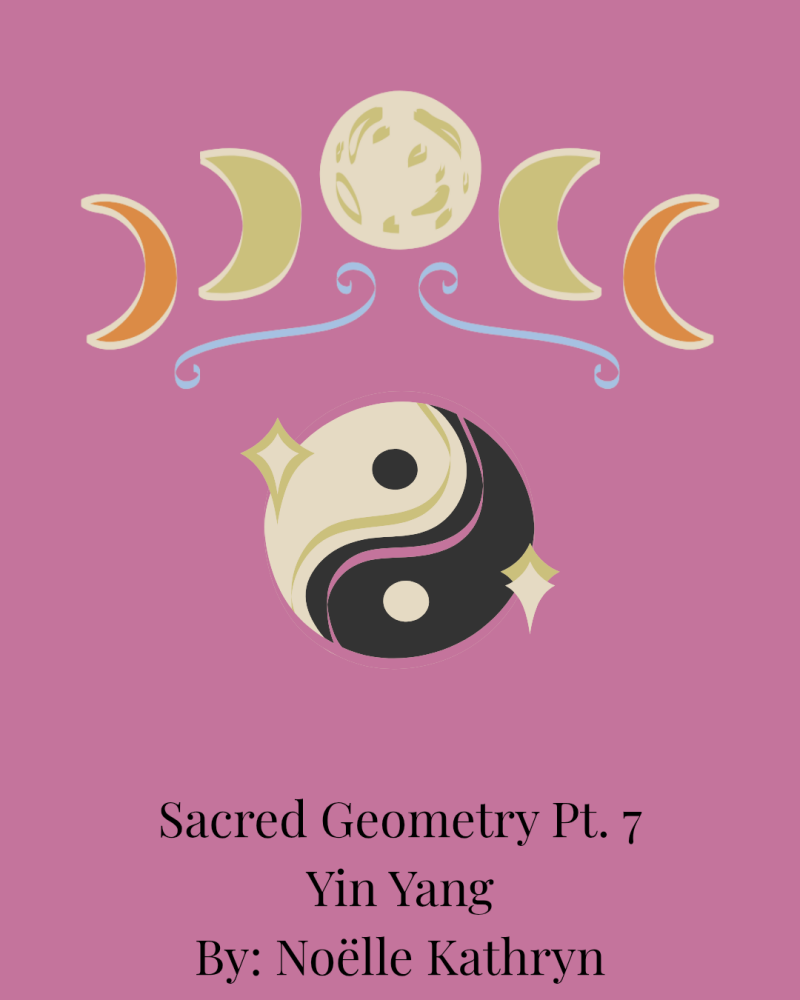
One of the most widely recognized sacred symbols of ancient Chinese culture is the yin yang. The shape itself gives the immediate impression of opposites coming together to create the whole circle. What makes it interesting, though, is that it is not just half of a circle. The two parts swirl together in the middle with each part holding a small piece of the other. Beyond the obvious lies deeper meanings to this piece of sacred geometry.
As well as the symbol, the yin yang is also descriptive of the philosophy behind it. Coming from ancient China, the yin yang describes how the universe runs on the concept of two opposite forces joining together to make a whole. For the image itself, the circle represents the whole universe. The black section is yin, while the white section is yang. These two sections are seen swirling together, bringing unity. The small dots that lie in the center circle of each color represents how each opposite holds the truth of the other. It gives a visual to the philosophy of balance. When there is harmony between opposites, the universe can find balance.
There are four key principles to the yin yang. First, it tells us that everything is connected. It reminds us that they are not separate forces, but interconnected aspects of the same whole. The symbol shows us that just because something is the opposite does NOT mean they are enemies of each other. This also helps to define one another. This sacred shape reminds us that we- as well as the universe- are constantly undergoing transformations. It sings the song of impermanence and the idea that one thing absolutely can transform into the other. Lastly, the goal is balance. The goal cannot be dominance because harmony is a by-product of balance, and that is ultimately the point of the yin yang. Harmony.
Breaking the circle down completely and drawing it from the bones up can help to show the yin yang's philosophies. To start, draw an empty circle with one dot in the center. This represents the source energy and the idea of “oneness”. Next, split your circle into vertical halves and color in one of the sides. These two sections show us the world of duality, with the white side representing masculine energy and the black side being feminine energy. After that, split your circle into fourths. These quarters symbolize the four physical elements. The fire and air elements are male, while the water and earth elements are female energy. Next, draw a blank circle in the center of the upper half of your four quadrants. Don't forget to place a black dot in the middle of your small circle. That shows the divine masculine with the seed to the feminine being held in the center. Repeat that same process for the lower half of the shape and color it in, leaving a small blank dot in the center of the yin portion of the sacred symbol. This represents the divine feminine that contains the masculine seed. To finish off, erase your grid and smaller circle inner lines. Now, you have successfully completed the steps to this ancient philosophical symbol. Once again, the shape as a whole represents cycles and the interconnected nature of opposite energies.
While the yin and yang are clearly opposites, each side represents their own thing. Here is a short list of their correspondences. Yin is written first, followed by the properties of yang.
Yin, yang
Feminine, masculine
Receptive, active
Passive, aggressive
Inward, outward
Dark, light
Calm, energetic
Coldness, warmth
Intuition, reason (logic)
Rest, action
Water, fire
Earth, air
Moon, sun
Circular, linear
Death, birth
Feeling, thinking
Process, outcome
Now that you have a better understanding of the philosophy and meanings held by the yin yang, allow me to leave you with one final, simple thought…
There is nothing wrong with dark or light as long as they are able to work together in harmony.
Sacred Geometry Pt. 6
The Seed of Life
By: Noëlle Kathryn
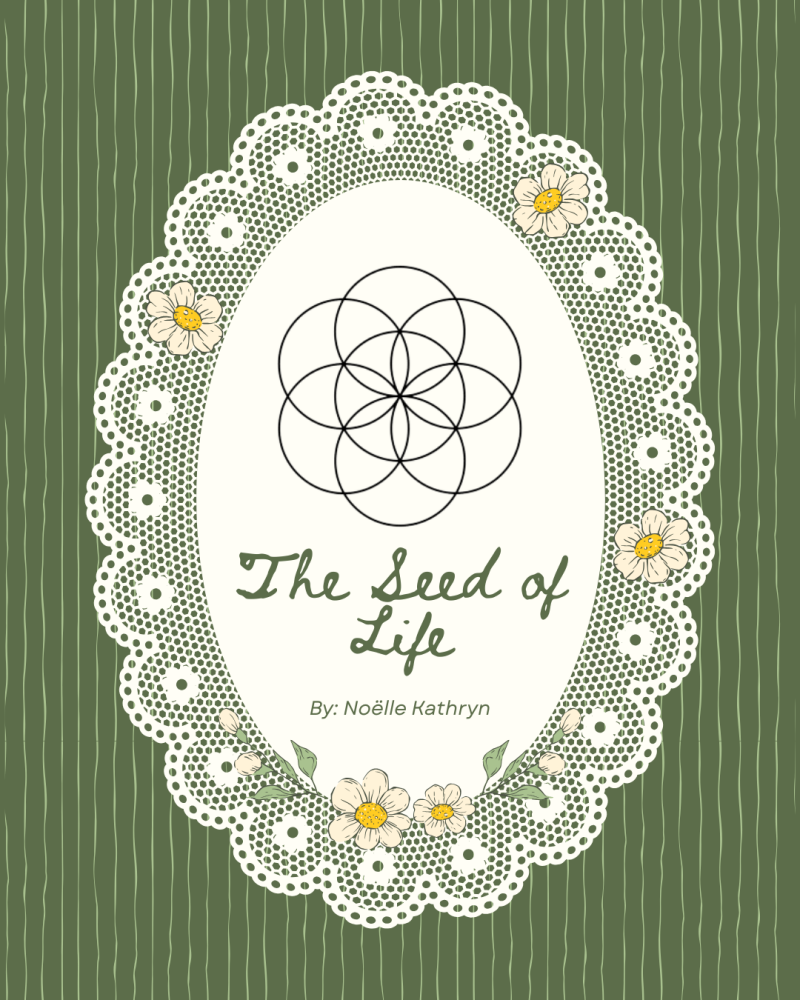
The seed of life is the most ancient of the sacred geometry symbols. It consists of seven circles. One circle sits in the center with six others intertwined, encompassing the center circle. The center represents the first pattern of creation, followed by themes of unity from which all of life emerged- as seen by the outer layer of circles. The seed of life is the blueprint for the flower of life and the universe itself.
This sacred symbol is found in many cultures all over the world. Most notably, it can be found throughout ancient Egypt, Greece, Rome, India, and China. Seen from architecture to nature, the seed of life can be found all the way down to a molecular level in the form of cells and human DNA.
This sacred geometric shape is representative of the moment of creation. It speaks of when the unseen finally becomes the seen. This is when infinity very first became expressed by a visual concept. The shape holds many other meanings like creation and birth, as well as unity and wholeness. This is seen by the interactions between the individual circles coming together to create a whole, foundational concept. It symbolizes infinite potential and connections. The shape also sings of the Divine blueprint and the beginning of all things.
Along with a plethora of meanings, the seed of life gives us plenty of properties to work with, too. This shape awakens the infinite potential inside all of us. It boosts creativity and promotes harmony. It serves as a reminder of unity and your connection to all that is. This shape allows you to open your mind to Divine intelligence. It is also a phenomenal aid in personal growth work and spiritual awakenings.
You can work with this ancient and sacred shape in a few different ways. The easiest and most common way is to focus on the shape during a meditation session. You can also use it to set intentions and use it as a focus point for manifestations. Using the imagery with your crystals and altar tools can bring them the seed of life's properties. You can hang it as artwork or draw it yourself to connect deeper to its meanings and the unity of the universe as a whole. The last way to use this sacred symbol is to spend time outside and connect with nature. Along with the seed of life, remember, YOU are also nature.
The seed of life works deeply and meaningfully within all of us. It is up to us as individuals to unlock its powers and properties within our higher selves. Use this article and the shape to unite with the Divine blueprint for all of creation- you included.
☆
Sacred Geometry Part 1: The Loop, Spiral, & Vesica Piscis
Sacred Geometry: The Spiral, The Loop, & The Vesica Piscis
Sacred Geometry: Part 2
The Flower of Life
By: Noëlle Kathryn
We are all built from the same blueprint. We are all made up of the same blueprint as creation itself- the Flower of Life. This sacred geometric shape serves a great importance in the spiritual, physical, and mental realms throughout many cultures and lands. To understand the flower of life is to understand you cannot understand all of it, all you have is your blueprint connection to anything and everything.
This sacred shape contains all of the geometric patterns of the universe. It is constructed by overlapping circles, building on the shape outwards, towards infinity. The shape holds fundamental patterns of life itself. In short- it symbolizes creation. In creation is the unity of everything. Everything is made from the same. exact. blueprint. The Flower of Life hold the idea that mind, body, and spirit are all interconnected. This sacred geometry symbol represents infinite unity, eternal life, and the cycle of all existence. It sings of harmony and balance. Working with this shape can bring you those AND an enhanced sense of energy, focus, and spiritual growth. The shape sits in alignment with the universal order and flow. It serves as a stark reminder that we are all interwoven on the web of life.
Uses of this sacred shape come in many different forms. A common practice is to focus your meditation around the flower of life. This will help to create a deeper focus and a better connection with your higher self. Placing the shape in a sacred space will promote a rise in vibrations and welcome in peaceful energy. Rituals are another good way to incorporate this shape into your practices. This will amplify your intentions as well as manifesting abundance and healing. You can place it under crystals and/or altar tools and decorations. This also assists in those object's energy enhancement. If you plan on putting the shape on display as artwork, it will aid in protection, balance, and positive energy over the space that it resides. A more personal way of engaging with this sacred shape is to use it in your journaling process. Drawing and/or focusing on this image while you journal will bring you insights and spiritual clarity as you write your passages. One final idea is to keep the shape close to you. Use it as a reminder of three main concepts:
You are connected.
You are protected.
You are one.
Sacred geometry is not only found out in the universe, but it is in you, too. You are the pattern. You are sacred geometry in motion.
Create Your Own Website With Webador